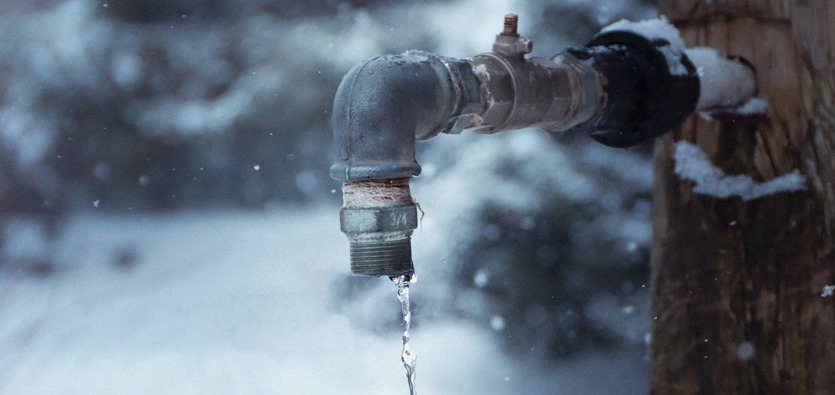
A frozen outdoor faucet might look like a small winter plumbing problem, but turning the water back on too soon could reveal a cracked pipe behind your wall. Edmonton’s freezing temperatures can damage outdoor taps and connected water lines, especially when water remains trapped inside. At Dunn Rite Plumbing, we help homeowners identify problems that require professional plumbing repair in Edmonton. Before reopening a shut-off valve, it’s important to check for signs of damage and understand when the water should stay off.
Why Do Outdoor Faucets and Water Pipes Freeze in Edmonton?
Outdoor faucets are exposed to freezing temperatures throughout Edmonton’s winter. When water remains inside a faucet or connected pipe, it can freeze and expand.This expansion creates pressure inside the plumbing system. If the pressure becomes too high, the pipe or a fitting can split.The damage is not always visible from outside. Sometimes, the pipe freezes inside the wall, where it connects to the outdoor faucet.Several conditions increase the risk of freezing:- A garden hose remains attached during freezing weather.
- Water is trapped inside an outdoor faucet or supply line.
- An exterior wall has poor insulation.
- Cold air enters through gaps around the plumbing.
- The indoor shut-off valve was never closed before winter.
- An outdoor faucet was installed or winterized incorrectly.
How Can You Tell if an Outdoor Faucet or Pipe Has Frozen?
A frozen faucet does not always mean the pipe has burst. However, you should avoid using it until you understand what happened.Signs of a Frozen Outdoor Faucet
You may notice that:- Little or no water comes from the faucet.
- The handle is difficult to turn.
- Ice or frost is visible around the fixture.
- A connected hose feels frozen or rigid.
- Water flow stopped after a period of extreme cold.
Signs of a Split or Burst Water Pipe
A damaged pipe may produce more serious warning signs.Look for:- Water stains on an interior wall near the outdoor faucet.
- Damp insulation or drywall.
- Water dripping into a basement or utility room.
- An unusual hissing or spraying sound.
- Water pressure dropping unexpectedly.
- A musty smell near the affected wall.
What Should You Check Before Turning Water Back On?
If you suspect a frozen outdoor faucet or split pipe, keep the affected water supply shut off until you can assess the situation.A few careful checks can help you determine whether professional emergency plumbing service is necessary.1. Locate the Outdoor Faucet’s Indoor Shut-Off Valve
Many Edmonton homes have an indoor valve that controls the water supply to an outdoor faucet.You may find it in:- An unfinished basement.
- A utility room.
- A ceiling space near an exterior wall.
- An accessible plumbing area below the outdoor faucet.
2. Check the Pipe Where It Enters the Wall
If the plumbing is visible from your basement or utility room, examine the pipe connected to the outdoor faucet.Look for cracks, unusual swelling, corrosion, loose fittings or moisture around the connections.Pay particular attention to the area where the pipe passes through the exterior wall.That section may be exposed to cold air even when the basement feels warm.If the pipe disappears behind finished drywall, do not assume it is undamaged simply because the visible section looks normal.3. Inspect Nearby Walls and Floors
A split pipe inside a wall may leak into building materials rather than onto an exposed floor.Check for damp patches, paint that has started bubbling, softened drywall or water collecting near the baseboard.If the affected faucet is above a finished basement, inspect the ceiling below it as well.Water may travel along framing or plumbing before becoming visible.4. Check Whether Other Faucets Have Water
Test another indoor faucet that is not connected to the suspected frozen outdoor line.If other fixtures have normal water flow, the issue may be isolated to one branch of the plumbing system.If several taps have little or no water, the problem may involve a larger frozen supply line or a neighbourhood water service interruption.Avoid repeatedly opening the affected outdoor faucet to test it.5. Look for Water Around the Shut-Off Valve
The indoor shut-off valve may also show signs of damage.Check the valve body and nearby pipe connections for moisture, cracks or dripping.If water continues leaking despite the valve being closed, you may need to shut off the main water supply and arrange professional repairs.These observations can help a residential plumber understand the problem before arriving.Why You Should Not Immediately Thaw a Frozen Outdoor Faucet
It can be tempting to pour hot water over a frozen faucet or use a heat gun to melt the ice.However, uncontrolled heating can damage plumbing materials, and some thawing methods create serious fire hazards.A frozen pipe may also have a crack that is hidden by ice. Thawing the pipe without controlling the water supply could allow water to escape.The City of Edmonton’s seasonal fire safety guidance warns residents never to use a blowtorch or another open flame to thaw frozen water pipes.Avoid using:- Blowtorches or propane torches.
- Open flames.
- Uncontrolled high-temperature heating equipment.
- Electrical heating devices near standing water.
- Excessive force on frozen faucet handles.
When Is It Safe to Turn Water Back On After a Frozen Pipe?
Water should only be restored when the affected plumbing has thawed completely, any damage has been repaired, and the line has been checked for leaks.If there is evidence of a split pipe, moisture inside a wall or an inaccessible frozen section, leave the supply off until a plumber has assessed the problem.How a Plumber Checks a Frozen Pipe Before Restoring Water
Our professionals may begin by checking the outdoor faucet, its connected supply line and the indoor shut-off valve.The inspection can include:- Identifying the section of plumbing affected by freezing.
- Checking accessible pipes and fittings for cracks or separation.
- Examining the outdoor faucet for freeze-related damage.
- Repairing or replacing damaged components.
- Testing the repaired plumbing for leaks.
- Restoring the water supply under controlled conditions.
Watch for Leaks After Water Service Is Restored
Once the affected plumbing has been inspected and cleared for use, water can be restored carefully.The person restoring service should monitor the repaired section and nearby fittings while pressure returns.Check the area around the faucet and the interior wall for dripping, dampness or unexpected water flow.If any sign of leakage appears, stop the water supply again.Do not leave the property immediately after service is restored. Some leaks take time to become noticeable.When Should You Call an Emergency Plumber in Edmonton?
Not every frozen outdoor faucet requires an emergency repair. However, certain problems should be addressed promptly to reduce the risk of water damage.Contact an emergency plumber in Edmonton when:- Water is actively leaking from a frozen or split pipe.
- The main water supply cannot be shut off.
- Water is entering a finished wall, ceiling or basement.
- Several fixtures have lost water due to suspected freezing.
- A pipe has visibly cracked or separated.
- The damaged section is hidden behind a wall.
- You cannot safely identify or isolate the affected supply line.